The Hidden Costs of OTA Dependency (Beyond Commission)
Booking sites charge commission — and they keep guest emails, slow payouts, and cap how you price. Here's what OTA dependency really costs villa hosts in India.
The Hidden Costs of OTA Dependency (Beyond Commission)
TL;DR — The line item on your OTA invoice is only the visible part. The rest shows up as weaker repeats, slower cash, blurred branding, and price grids you don't fully control — especially painful for multi-unit operators in India.
Why this matters
If you manage even five rooms — villas in Goa, cottages in Coorg, or a small resort — you've already stared at an OTA withdrawal sheet and thought "Why is this still worth it?" The commission percentage is the easy answer. The honest answer is that dependency taxes your business in half a dozen quieter ways that never get a separate invoice.
This post is for property managers and boutique operators who are doing the math on why leave Booking.com or scale back Airbnb share — not to quit overnight, but to see the full P&L picture.
24–48htypical OTA payout lag
0exportable guest CRM from most OTA inbox UIsCommission vs. everything else (comparison)
| Area | Heavy OTA mix | Healthier direct mix |
|---|---|---|
| Guest identity | Often masked or policy-limited; remarketing is clunky | Email and WhatsApp from your enquiry flow; you own the thread |
| All-in price guests see | Your rate + large guest service fee at checkout | You quote a total that matches what lands in their bank transfer |
| Cash timing | Payout after check-in rules | Holding deposit + UPI can arrive same day |
| Brand | Guest remembers "I found it on Airbnb" | Guest remembers your villa name and Instagram |
| Rate experiments | Constrained by parity psychology and grid comparisons | Monsoon promos, long-stay bundles, repeat codes — no public grid |
| Disputes & chargebacks | Platform policy often decides | Your documented policy + local small-claims path |
The table isn't theology — plenty of hosts run 40% OTA / 60% direct and sleep well. The point is to price that 40% as a deliberate marketing spend, not as an accident of having no other channel.
Portfolio operators feel this first
With one villa, a slow OTA payout is annoying. With ten keys and a payroll, it's a working-capital problem. That's when "hidden cost" shows up on a spreadsheet row labelled interest or missed supplier discount.
The five hidden costs hosts underestimate
1. You can't remarket the way D2C brands do
When your next-season discount lives in a platform's inbox instead of your WhatsApp broadcast list, you pay re-acquisition on guests who already slept in your sheets. That's margin you don't see on the OTA statement.
2. The guest fee is "their problem" until it isn't
Guests compare checkout totals, not your host dashboard. A sharp direct quote on WhatsApp — same room, lower all-in — wins enquiries that never become an OTA impression count. We unpacked the fee stack for Indian hosts in How Much You Actually Pay Airbnb in 2026.
3. Payout latency stacks with seasonality
High season means high cleaning costs before the OTA settlement hits. Direct holding deposits (see our WhatsApp templates post) smooth the mismatch.
4. Brand equity leaks to the platform
Boutique properties win on story — the chef, the plunge pool, the coffee estate walk. OTAs flatten that into stars and review scores. Your own site and Instagram highlights put the story back where it belongs.
5. Operational drag at scale
Every OTA-only PM eventually duplicates calendars, messages, and policies across apps. A unified calendar — we wrote about managing Airbnb, Booking.com, and direct from one place — cuts the administrative tax.
See commission + direct savings side by side
Doorloom's savings calculator turns your monthly OTA revenue into a live annual and 5-year savings figure — Airbnb, Booking.com, and MakeMyTrip rates baked in.
A practical decision frame for PMs
- 1
Label your OTA share as acquisition spend
Open last quarter's ledger. Divide OTA fees + guest-service-fee impact (see our commission explainer) by net new guests who had never stayed with you before. That's your real cost per cold lead — compare it to Instagram ads or Google. - 2
Measure repeat intent manually for 30 days
After each checkout, note whether the guest followed you on Instagram or saved your WhatsApp. If repeats cluster in your inbox but first-touches cluster on OTAs, you're already proving the funnel — you just aren't monetising it. - 3
Carve a direct allocation target
Pick a number you can defend operationally — often 40% → 60% direct over 9–12 months for villa clusters. Pair it with one workflow change per month (enquiry widget, iCal sync, deposit message).
"Isn't this just complaining about marketplaces?"
Marketplaces are useful — discovery is their job. Hidden cost thinking only asks: Am I paying discovery rates for guests who already know my name? If yes, you don't have a moral problem; you have a leaky funnel. Fix the leak before you raise ADR.
Reply when OTA guests DM you on WhatsApp.
Doorloom pushes new enquiries and reminders so property managers aren't refreshing three inbox apps at midnight.


Frequently asked questions
The takeaway
Leaving an OTA entirely is rarely the goal — balancing toward owned guest relationships is. Once you count the non-commission costs, the business case for a serious direct channel stops being guesswork.
Model your portfolio against OTA commission drag
Plug in your monthly OTA revenue and inventory — the savings calculator shows what you'd keep if those bookings moved direct.
Download the Doorloom app
Run your rentals from your pocket.
Approve bookings, reply to enquiries on WhatsApp, and check today's check-ins — all from the Doorloom mobile app.
Keep reading
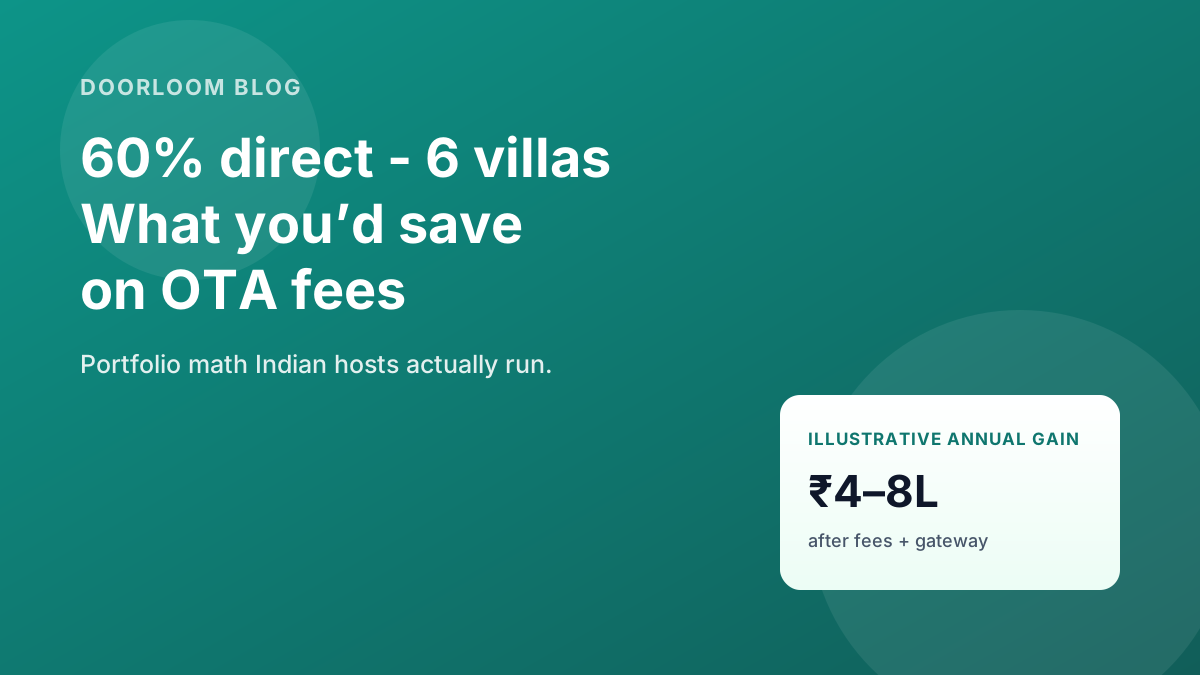
Calculate Your OTA Savings: What 60% Direct Would Look Like for a 6-Villa Portfolio
Six villas at 60% direct often save ₹4–8L yearly vs a heavy OTA mix. Run your real numbers through Doorloom's savings calculator before you change rates.
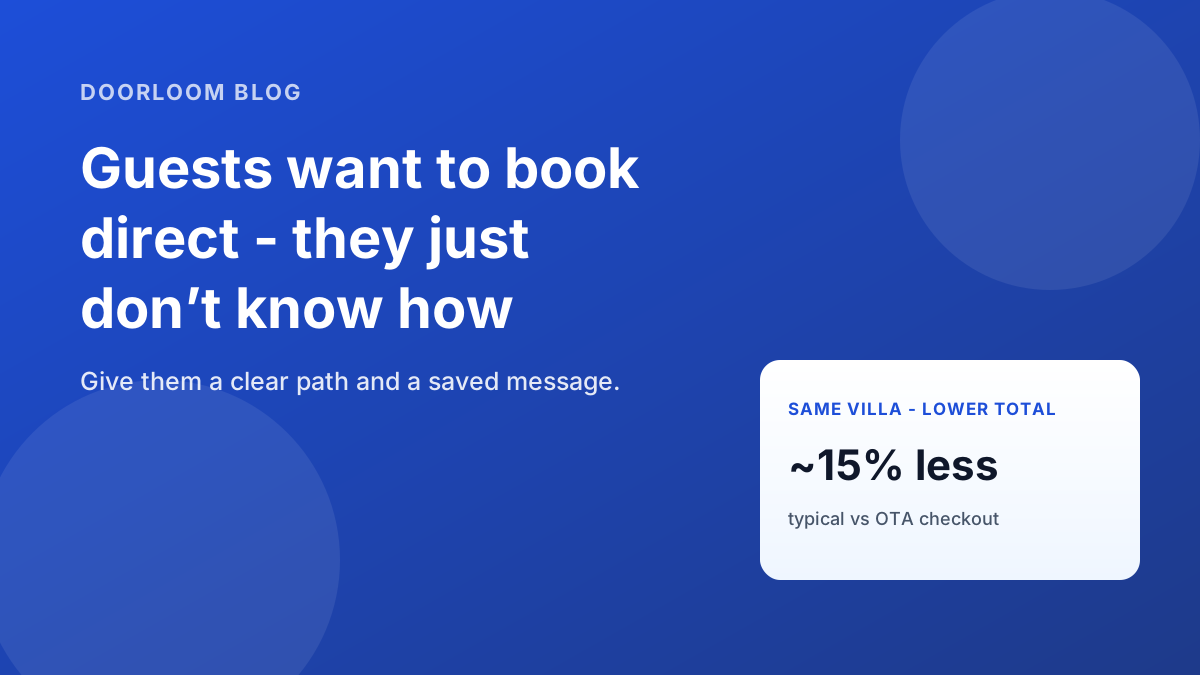
Why Your Guests Want to Book Direct (and Don't Know How)
Guests want lower totals and fast WhatsApp replies — but OTAs feel like the default. Here's why direct helps them too, with a copy-paste message to save.
Add an Enquiry Button to Your Villa Website in 10 Minutes
Stop losing late-night browsers. A floating 'Plan your stay' button captures leads to WhatsApp + your Doorloom dashboard, even while you sleep.