Calculate Your OTA Savings: What 60% Direct Would Look Like for a 6-Villa Portfolio
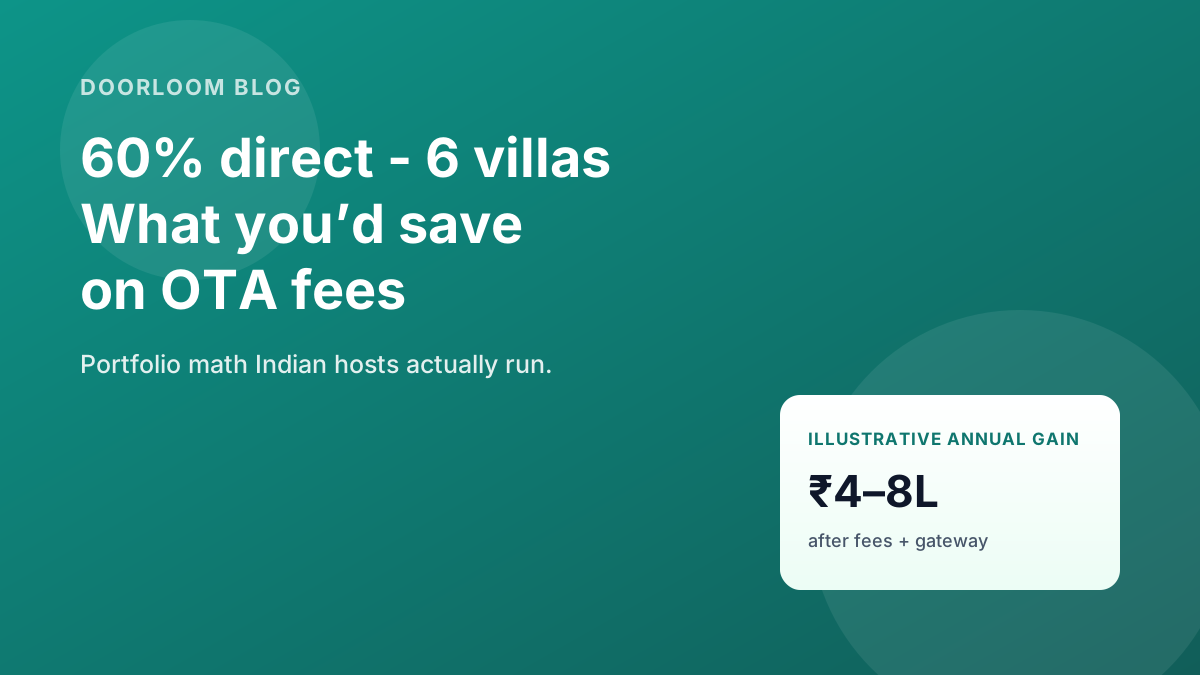
Six villas at 60% direct often save ₹4–8L yearly vs a heavy OTA mix. Run your real numbers through Doorloom's savings calculator before you change rates.
Calculate Your OTA Savings: What 60% Direct Would Look Like for a 6-Villa Portfolio
TL;DR — Treat six villas at ₹3.5L/month average gross as ~₹21L/month on the top line. Move from mostly-OTA to 60% direct and you're often looking at ₹4–8L/year back — after accounting for payment rails — before counting occupancy lift from sharper direct pricing.
Why this matters
Property managers don't argue about whether OTAs work — they argue about margin per key once payroll, EMIs, and marketing float are paid. A portfolio model makes the decision blunt: If I re-point three out of five future bookings to direct, what happens to my EBITDA?
This post is a worksheet you can hand to a founder-investor or your internal finance cousin. For the fee lines themselves, start from How Much You Actually Pay Airbnb in 2026.
₹21Lillustrative monthly gross, 6 × ₹3.5L villas 60%direct share target in the model below
₹4–8Ltypical annual fee recovery bandBaseline inputs (edit these to match you)
| Input | Illustrative value | Your notes |
|---|---|---|
| Villas | 6 | Count only revenue-contributing units |
| Average gross / villa / month | ₹3,50,000 | Pre-OTA fees; what guests pay all-in |
| Current OTA share of gross | 85% | Honest PMS or ledger split |
| Target OTA share after 12 mo | 40% | Implies 60% direct |
| Direct payment cost | 1.2% | Blend UPI + cards |
Nothing here is prescriptive — swap ₹2.8L or ₹4.1L per villa if that's your real curve; the structure stays the same.
Three layers of savings (don't skip layer 3)
Layer 1 — Host-side fees you see on statements
Host service fee + GST on that fee + processing trim. On a heavy Airbnb mix this often lands ~3.5–5% of gross once GST is included — Booking runs higher depending on contract. Your statement is the source of truth.
Layer 2 — Guest-side fee you feel as "ADR pressure"
Guests compare checkout totals. A 14–17% guest service fee (plus GST) means your OTA-listed price has to stand taller than your direct quote for the same net. Moving share to direct often lifts conversion without a race-to-the-bottom nightly rate cut — you're simply removing the platform wedge.
Layer 3 — Operational time (PMs only)
Six villas × three inbox apps × high season is a staffing line item. One unified calendar — see managing Airbnb, Booking.com, and direct from one calendar — cuts duplicate updates. That's not in the table below; add it if you track hours.
Scenario tabs — conservative vs. stretch
This is sensitised, not audited
Doorloom's blog models are illustrative — your CA signs tax paperwork, not us. Use the ranges to prioritise product and ops work, not to file statutory accounts.
Run your actual OTA revenue through the savings calculator
The Doorloom savings calculator multiplies your monthly OTA revenue by 2026 Airbnb / Booking.com / MakeMyTrip commission rates, subtracts your Doorloom subscription, and shows annual and 5-year savings — tuned for Indian hosts.
Step-by-step: from napkin to board slide
- 1
Export 90 days of gross by channel
Split **Airbnb gross**, **Booking gross**, **direct gross**. If you're mixing invoices, tag future stays by deposit source — rough is fine. - 2
Apply your true OTA percentage drag
Use platform statements, not vibes. Cross-check with the fee table in our Airbnb commission explainer if Airbnb dominates. - 3
Model the direct rail cost honestly
Pull your Razorpay / bank summary — blend UPI, cards, and rare international wires. Most villa operators land 0.8–2.2% depending on mix. - 4
Set a share target with a date
Example: 60% direct by Diwali with milestones — enquiry widget live, iCal synced, post-stay script deployed. Calendar blocking tactics: iCal sync guide.
Watch margin while you're on site visits.
Doorloom's mobile app keeps enquiries and calendar clashes from sneaking past you between villas.


Frequently asked questions
The takeaway
Six villas don't need six times the hero marketing — they need one repeat-guest machine. The arithmetic for 60% direct is boring on purpose: small fee percentages on big monthly gross become lakhs per year fast. Punch your real numbers into the savings calculator next — sanity checks beat debate.
Turn the model into a 90-day ops plan
Pair calculator outputs with enquiry capture and WhatsApp templates — the same stack boutique operators in Goa and Coorg are running now.
Download the Doorloom app
Run your rentals from your pocket.
Approve bookings, reply to enquiries on WhatsApp, and check today's check-ins — all from the Doorloom mobile app.
Keep reading
Why Your Guests Want to Book Direct (and Don't Know How)
Guests want lower totals and fast WhatsApp replies — but OTAs feel like the default. Here's why direct helps them too, with a copy-paste message to save.
The Hidden Costs of OTA Dependency (Beyond Commission)
Booking sites charge commission — and they keep guest emails, slow payouts, and cap how you price. Here's what OTA dependency really costs villa hosts in India.
Add an Enquiry Button to Your Villa Website in 10 Minutes
Stop losing late-night browsers. A floating 'Plan your stay' button captures leads to WhatsApp + your Doorloom dashboard, even while you sleep.