How Much You Actually Pay Airbnb in 2026 — The Real Commission Math
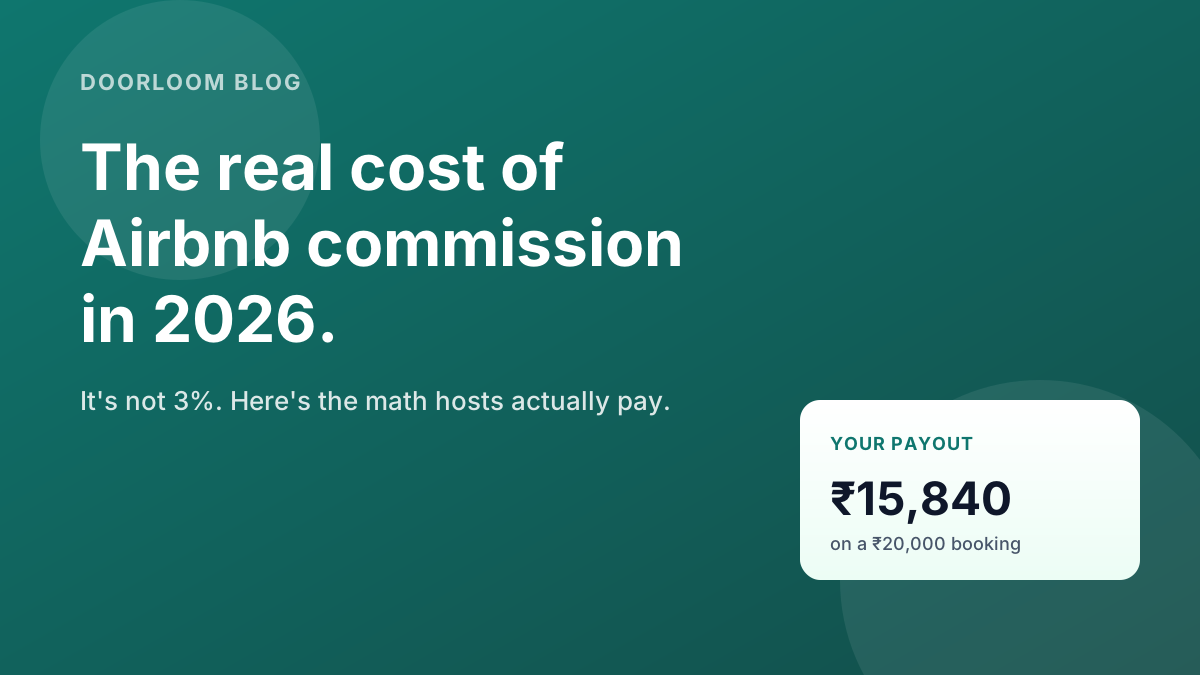
Airbnb's '3% host fee' isn't the whole story. Here's the real take on a ₹20,000 booking — service fees, GST, payment cuts — and what 60% direct would save you.
How Much You Actually Pay Airbnb in 2026 — The Real Commission Math
TL;DR — Airbnb's "3% host fee" is the smallest line on a long bill. Once the guest service fee, GST, and payment processing are added, a ₹20,000 Goa booking usually nets you around ₹15,800 — and your guest paid ₹23,600. Going 60% direct on a typical 6-villa portfolio claws back ₹4–6L a year.
Why this matters
You probably opened this post because someone told you Airbnb takes "just 3%." That number is real — and it is also misleading. The 3% is what Airbnb deducts from your payout. It is not what your guest pays on top of your nightly rate, it is not the GST stacked on the service fee, and it is not the payment-processing trim that quietly reduces your settlement.
The real question isn't "What's Airbnb's cut?". It's "For every ₹100 a guest pays, how much actually lands in my bank account, and what would the same booking look like coming through my own website?" Once you answer that, the case for going direct stops being theoretical.
₹3,800lost on a ₹20K booking 14–17%guest service fee in 2026
₹4–6Lannual gain at 60% direct, 6 villasThe 3% you see, and the 14–17% you don't
Airbnb runs two fee models worldwide. In India, almost every villa and homestay is on the split-fee model — the host pays a small percentage and the guest pays a larger one.
Here is what those two fees do to a booking where your listed nightly rate is ₹10,000 for two nights — a ₹20,000 trip.
| Line item | Amount | Notes |
|---|---|---|
| Your nightly × 2 nights | ₹20,000 | What your listing shows for "2 nights" |
| Airbnb host service fee (3%) | −₹600 | Deducted from your payout |
| GST on the host fee (18% of ₹600) | −₹108 | Collected by Airbnb |
| Payment processing trim | −₹150 | Roughly 0.75% — varies by payment method |
| Your payout | ≈ ₹19,142 | Lands in your account ~24h after check-in |
| Airbnb guest service fee (≈ 16%) | +₹3,200 | Added on top of your price for the guest |
| GST on guest fee (18%) | +₹576 | Stacked on the guest fee |
| Your guest pays | ≈ ₹23,776 | This is the price they see at checkout |
Read that table twice. The number you "pay" is ₹858. The number your guest pays over and above your listed price is ₹3,776. That second number is the one that loses you bookings — guests anchor on the total they see at checkout, not on your "₹10,000 per night."
Why the guest fee matters even though you don't 'pay' it
A guest comparing your villa with the one next door doesn't care which side of the fee structure pays which line. They see the total. ₹23,776 vs. ₹19,500 — at the same nightly rate — is a 22% premium that pushes price-sensitive guests to a competitor or to the OTA next door.
The same booking, direct
Now let's run the same ₹20,000 trip through your own website with a Doorloom-style direct booking flow. Same property. Same dates. Same guest.
| Line item | Amount | Notes |
|---|---|---|
| Your nightly × 2 nights | ₹20,000 | Same listed rate |
| Payment gateway (≈ 2%) | −₹400 | UPI is closer to 0.5%; cards 2%; net banking ~1% |
| GST on gateway fee (18%) | −₹72 | If applicable |
| Your payout | ≈ ₹19,528 | Settles same day for UPI, T+1 for cards |
| Your guest pays | ₹20,000 | The price you advertise is the price they pay |
You net ₹386 more. The guest pays ₹3,776 less. Same property, same dates, same human. You can stop there — or you can split the difference and offer the direct guest a 5–10% discount that still leaves both of you better off than the Airbnb version of the same trip.
What 60% direct looks like at portfolio scale
Most hosts who actively work toward direct bookings sit somewhere between 40% and 70% direct after a year of consistent effort. Here is what 60% direct does to a 6-villa portfolio averaging ₹3.5L of monthly gross bookings per villa.
These aren't pitch-deck numbers. They're the same arithmetic any host can do on the back of a napkin. The point isn't to abandon Airbnb — it's to stop treating it as your only sales channel.
Want to see your own commission savings?
The Doorloom savings calculator runs your actual monthly OTA revenue against the 2026 Airbnb, Booking.com, and MakeMyTrip fee models and shows your direct-booking savings in seconds.
What hosts get wrong about the math
Three mistakes show up over and over again on calls with new Doorloom hosts.
- 1
Confusing the host fee with the all-in fee
The 3% is real, but it's the smallest line. The all-in fee — the gap between what your guest pays and what you receive — is usually 17–22% on a typical Indian villa booking once GST and processing are layered on. - 2
Assuming the guest fee 'isn't your problem'
The guest fee shows on your listing's checkout total. That total competes with every other listing the guest is comparing — including your direct site, if you have one. A guest who books direct sees a 15–20% lower number for the same room. - 3
Forgetting GST on the service fees
18% GST applies on top of both the host fee and the guest fee. On a ₹20,000 booking, that adds another ~₹680 to the wedge between what the guest pays and what you receive. It's small per booking; it's not small across a year.
"But Airbnb brings me bookings I wouldn't get otherwise"
True for some bookings, not for as many as you think. Here's the test worth running every quarter.
For each Airbnb booking from the last 90 days, ask yourself: did this guest find me on Airbnb because Airbnb's discovery is unbeatable, or did they find me via Instagram / Google / word-of-mouth and then click through to Airbnb to book?
Hi [guest_name]! Hope the [property_name] stay was lovely.
Quick favour — when you next plan a trip, you can book us direct at [direct_site_url] and skip the Airbnb fees (you'll see a price that's about 15% lower for the same dates).
We hold a few rooms off Airbnb for repeat guests too. Just send a date and party size on this WhatsApp and we'll lock it in.
— [your_first_name]
If 30–40% of your "Airbnb bookings" are guests who already knew you existed, you're paying full commission on traffic Airbnb didn't bring. That's the slice direct booking captures fastest.
Track every direct enquiry from your phone.
The Doorloom mobile app pings you the second a guest sends an enquiry from your website — and lets you reply on WhatsApp without leaving the app.


The simplest path to your first direct booking
You don't need a website redesign or an SEO consultant to start recovering this margin. Three things, in order:
- Put a "Plan your stay" button on your homepage so visitors can ask for dates without picking up the phone. We covered the setup step-by-step in Add an Enquiry Button to Your Villa Website in 10 Minutes.
- Send the post-stay WhatsApp above to every Airbnb guest for the next 90 days. Roughly 1 in 4 will book again — and the second booking is direct.
- Price your direct site at your all-in Airbnb total minus the guest service fee. Same effective price for the guest; full margin for you.
Frequently asked questions
The takeaway
Airbnb is a useful sales channel; it is not a free one. The hosts who stay healthy in 2026 treat OTA listings the way they treat any paid acquisition channel — measured against a real cost-per-booking, with a deliberate plan to migrate the relationship to direct after the first stay.
Run your own commission numbers in 60 seconds.
Plug in your monthly OTA revenue and the channels you list on — we'll show you the all-in OTA fee, your Doorloom subscription, and the annual + 5-year saving from going direct.
Download the Doorloom app
Run your rentals from your pocket.
Approve bookings, reply to enquiries on WhatsApp, and check today's check-ins — all from the Doorloom mobile app.
Keep reading
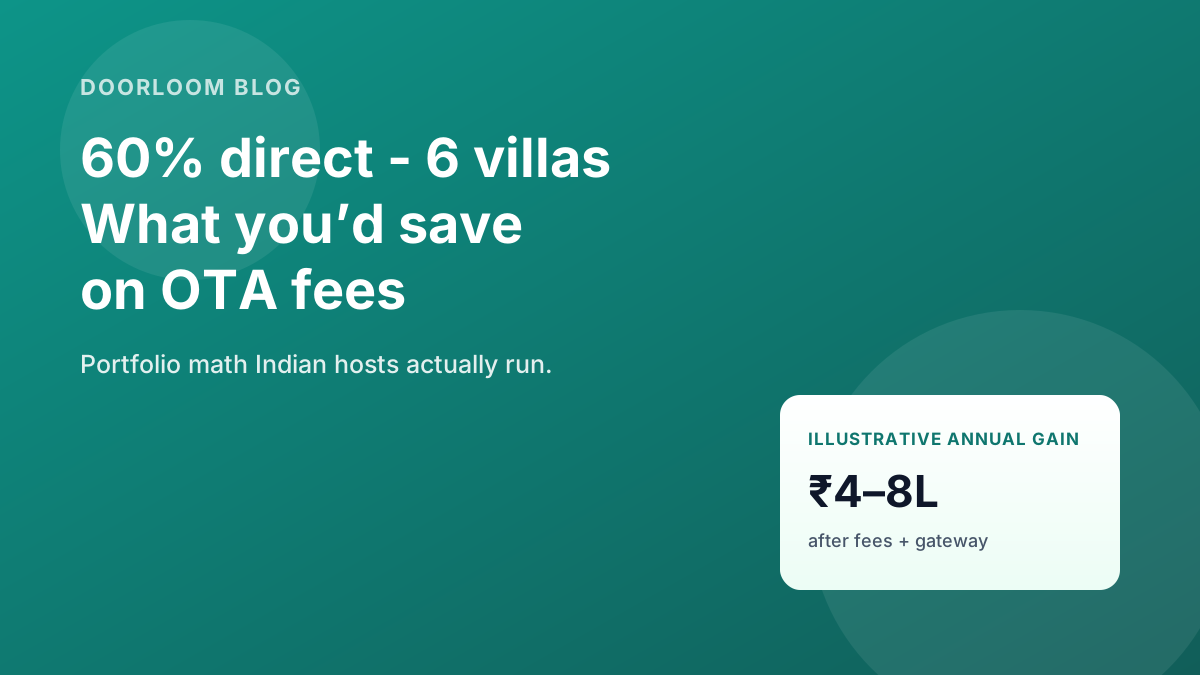
Calculate Your OTA Savings: What 60% Direct Would Look Like for a 6-Villa Portfolio
Six villas at 60% direct often save ₹4–8L yearly vs a heavy OTA mix. Run your real numbers through Doorloom's savings calculator before you change rates.
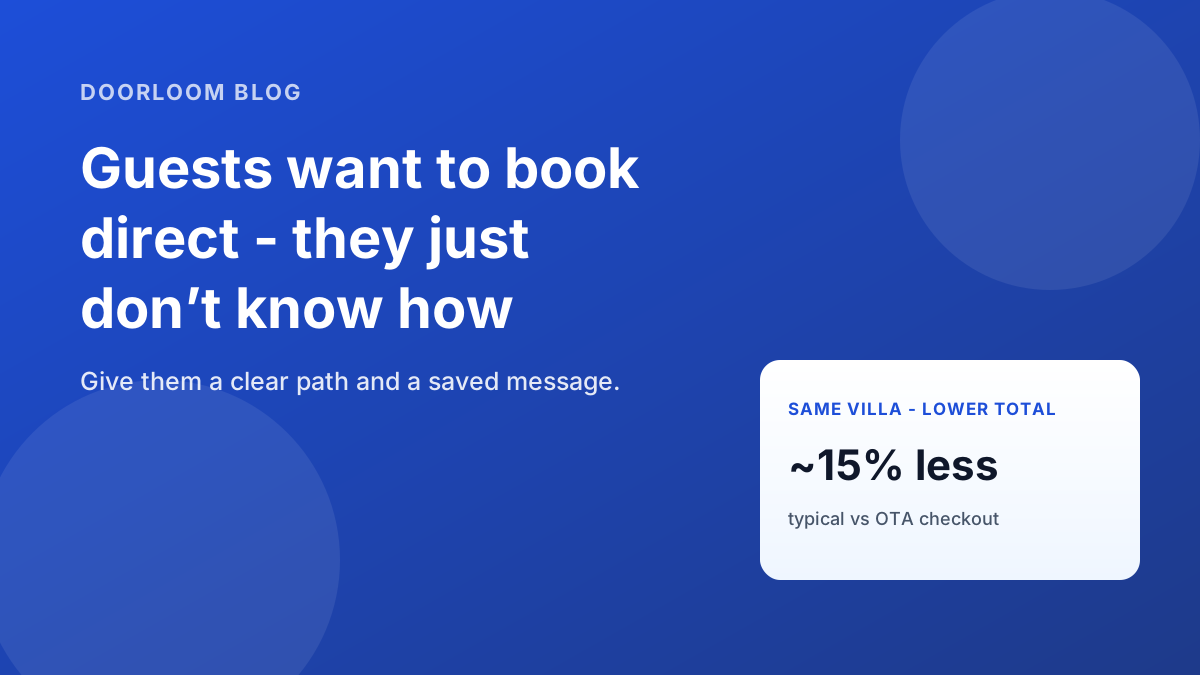
Why Your Guests Want to Book Direct (and Don't Know How)
Guests want lower totals and fast WhatsApp replies — but OTAs feel like the default. Here's why direct helps them too, with a copy-paste message to save.
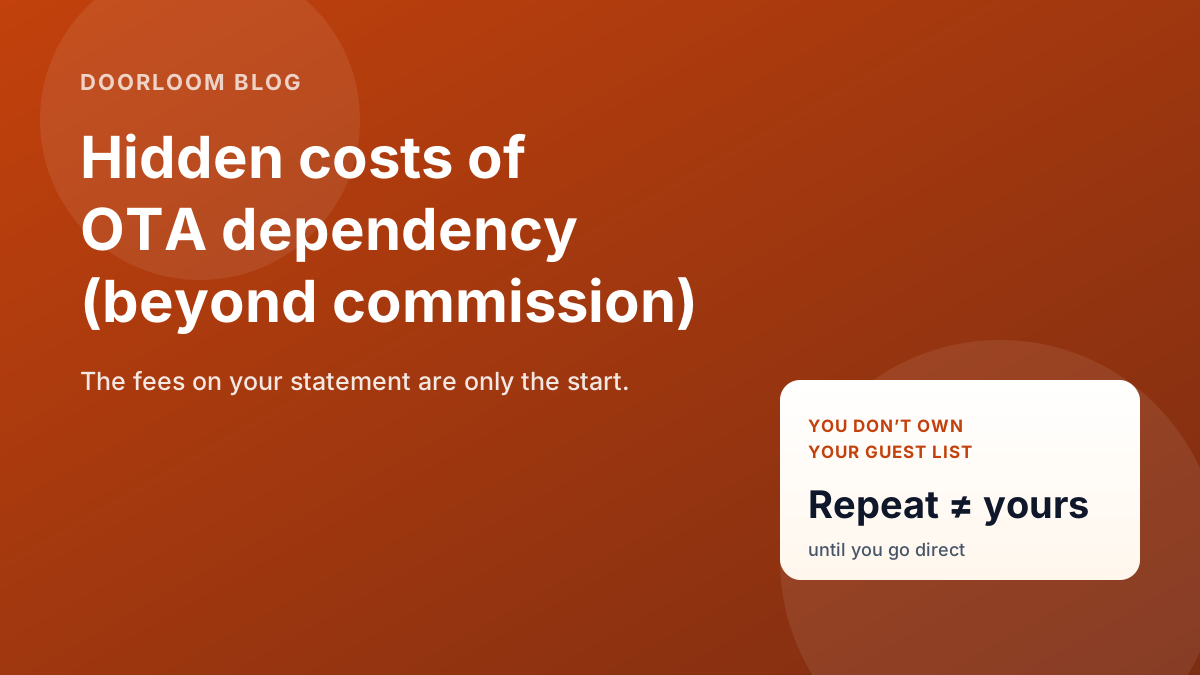
The Hidden Costs of OTA Dependency (Beyond Commission)
Booking sites charge commission — and they keep guest emails, slow payouts, and cap how you price. Here's what OTA dependency really costs villa hosts in India.