Dynamic Pricing for Vacation Rentals: A Practical Guide for Indian Hosts
How to set, raise, and discount your villa's nightly rate without an algorithm — based on demand, season, lead time, and length of stay. Built for Indian hosts.
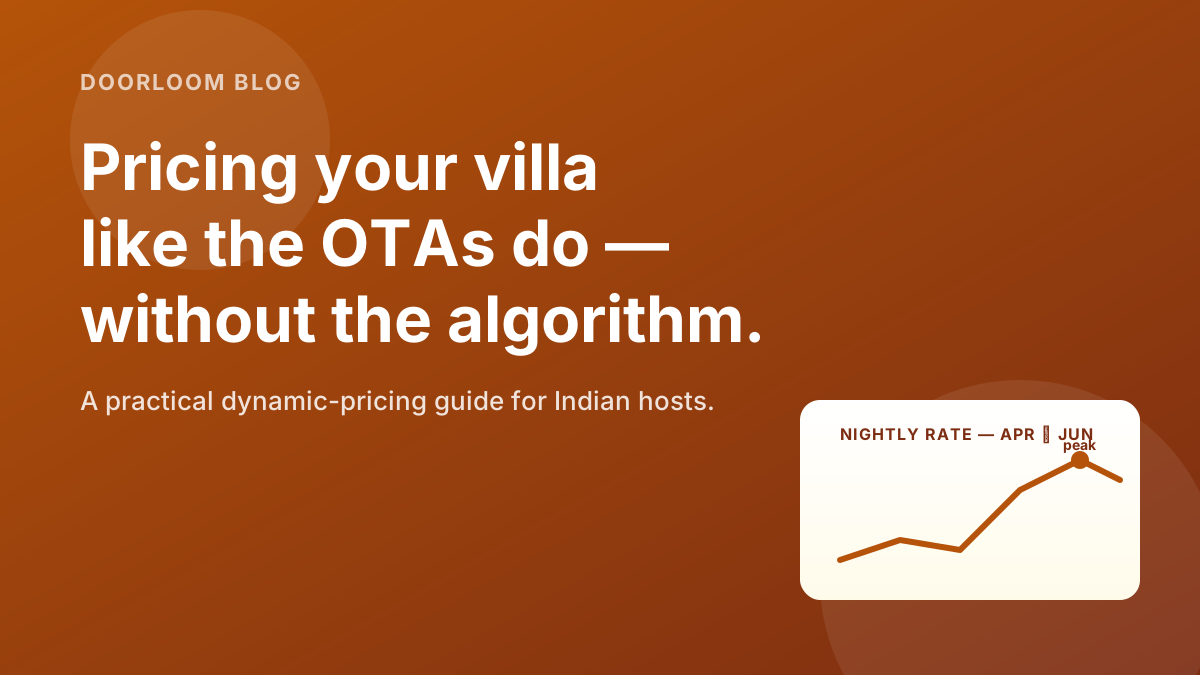
Dynamic Pricing for Vacation Rentals: A Practical Guide for Indian Hosts
TL;DR — Dynamic pricing isn't an algorithm; it's four rules: a base rate that's anchored to local comps, a weekend uplift, a seasonal flip, and a length-of-stay discount. Apply them weekly and you'll add 12–18% to RevPAR without touching a single tool.
Why this matters
Most Indian villa hosts set their nightly rate in January and update it twice a year. The result: full villas at low rates over peak long-weekends and empty villas at unmoving rates through the slow season. Both are revenue you walked away from.
The fix is not buying a dynamic-pricing tool. It is adopting a small set of rules and a 10-minute Monday-morning ritual to apply them. By the end of this post you'll have a base rate, a weekend uplift, a seasonal calendar, and a length-of-stay ladder — together they do 90% of what a paid algorithm does, without the subscription.
12–18%RevPAR lift from rules alone 10 minweekly pricing review
4rules cover most propertiesLever 1 — The base rate (anchored to comps)
Your base rate is the price for a midweek night in your normal season. Everything else moves up or down from here. Get this number wrong and every other rule compounds the error.
- 1
Pull comparable listings from Airbnb
Search your city + bedroom count + a midweek date 30–45 days out. Open the first 10 listings that genuinely match yours — same bed count, similar finish, pool if you have one. Skip outliers. - 2
Note the median nightly rate
Ignore the highest and lowest two. Take the median of the remaining six. That's your market midweek midpoint. - 3
Sit 10–15% under the median
If you're brand new (under 10 reviews), sit 15% under. If you're established with strong reviews, you can sit 5% under or even at the median. Going above the median only works when your photos and reviews visibly beat the comp set. - 4
Re-do this every quarter
Markets move. A quarterly pull takes 20 minutes and prevents your rate from drifting out of date.
Don't anchor to your own old prices
The single most common mistake is "last year I charged ₹X, so this year I'll charge ₹X + 8%." Last year's rate is irrelevant. The market sets the price; your job is to position inside it.
Lever 2 — The weekend uplift
Friday and Saturday nights are not midweek nights. In most Indian markets they price 25–60% higher than weekday rates because demand is genuinely 2–3× thicker.
A practical default for villa stays:
| Night | Multiplier on base | Notes |
|---|---|---|
| Mon, Tue, Wed | 0.85× | Slight discount to fill |
| Thu | 1.00× | Base rate |
| Fri | 1.30× | First weekend night premium |
| Sat | 1.40× | Peak demand night |
| Sun | 1.10× | Tail of the weekend |
This pattern pays for itself in two ways. You capture the willingness- to-pay on weekends, and you stop scaring off weekday guests with a one-size-fits-all premium rate. Weekday occupancy almost always lifts when you split the calendar properly.
Lever 3 — The seasonal flip
This is the one most hosts get backwards. Monsoon is not a uniform discount across India. Whether to drop your rate or raise it depends on whether your property is in a monsoon-cost market or a monsoon-peak market.
The rule of thumb: figure out demand, not the weather. Then build the calendar.
Lever 4 — Length-of-stay discounts
A 7-night booking and seven 1-night bookings produce the same revenue on paper, but the 7-night booking carries a fraction of the cleaning, linen, communication, and turnover risk. Reward longer stays deliberately.
| Length | Discount | Why |
|---|---|---|
| 1 night | +10% surcharge | Single-night stays cost the same to operate as 3-night ones |
| 2–3 nights | base rate | The standard weekend trip |
| 4–6 nights | −5% | Lower turnover overhead |
| 7+ nights | −10% | Big operational saving + locks the calendar |
| 28+ nights | −20–25% | Treat as a near-lease; you avoid GST on stays past a threshold and the booking essentially funds itself |
Doorloom lets you set these as automatic length-of-stay rules per property — once configured, the right discount fires whenever a guest queries those dates. No spreadsheet.
Sharper nightly rates compound — see what they save you.
Dynamic pricing wins evaporate into Airbnb / Booking.com / MakeMyTrip commissions. Doorloom's savings calculator shows how much of that uplift you keep once those bookings move direct.
The 10-minute Monday morning ritual
Good pricing isn't a one-off; it's a habit. Every Monday at the start of your day, do this — no more, no less.
- 1
Open the next 60 days of your calendar
You're looking for two patterns: open windows that should be filling but aren't, and dates already booked that you might have under-priced. - 2
Drop the price 5% on any open weekend within the next 14 days
Last-minute weekend bookings are the highest-velocity slot in the calendar. A small drop two weeks out converts faster than a large drop two days out. - 3
Raise the price 5–10% on any sold-out weekend in the next 30–60 days
If a date is gone, the market told you the rate was too low. Raise the next equivalent weekend and let the market price-discover for you. - 4
Spot-check competing listings near you
Open three or four comparable listings, check their next 30 days. If they're sold out and you're not, you're under-positioned on photos or copy more than on price. - 5
Save and move on
Ten minutes. Same time each week. Compounding effect over a year is enormous — most hosts gain back their entire Doorloom subscription cost in the first month of doing this.
What about last-minute discounts?
Last-minute discounts are a surgical tool, not a default. Use them only when a date is within 7 days and still vacant. The hierarchy:
- 7+ days out: hold the price. Rushing to discount only trains your market to wait.
- 3–7 days out: drop 10% if open. Test for response.
- 0–2 days out: drop up to 25%. Better a discounted booking than an empty night.
Why this matters
An empty night is a 100% discount. A 25% discount on a last-minute booking is, in revenue terms, a 75% gain over the alternative. The arithmetic favours the discount more often than hosts emotionally want to admit.
When to not discount
Three situations where holding the price almost always pays off:
- Long weekends — the market is short on supply by definition. Hold the rate; you'll fill at the higher number with one-night-out bookings if you've priced sensibly.
- The weekend immediately after you raise rates — give the market 72 hours to react before you reverse course.
- When you have a 5+ night booking already on those dates from a different OTA — a same-week discount publicly visible on Airbnb can violate parity terms and get the listing penalised.
"But I have one villa and no time for this"
Then do the simplest version: set a base rate (Lever 1), apply the weekend multiplier (Lever 2), and ignore the rest for a month. You'll already be ahead of 80% of your local competitors. Add the seasonal flip in month two; add length-of-stay rules in month three.
The whole framework is designed to be adopted incrementally. Don't try to flip everything in one Sunday afternoon.
Adjust prices on the move.
The Doorloom mobile app lets you bulk-update nightly rates for the next 30, 60, or 90 days from one screen — between meetings, in the car, anywhere.


How this connects to the rest of your business
Pricing doesn't operate in isolation. Three things compound it:
- A direct booking channel so you keep the margin you've earned by pricing well — the Airbnb commission math post walks through what you're really paying on each OTA booking.
- Faster reply times on enquiries so the price you set actually converts — see our WhatsApp templates post.
- A live enquiry capture button on your website so the calendar drives demand instead of waiting for it — covered in the enquiry button guide.
Frequently asked questions
The takeaway
Dynamic pricing for an Indian villa host doesn't require an algorithm. It requires four rules and ten minutes a week. Apply them consistently for one quarter and you'll see RevPAR move — not because you raised rates everywhere, but because you finally stopped under-pricing on the nights that were genuinely worth more.
Build your rate calendar in Doorloom.
Set a base rate, weekend uplift, seasonal flip, and length-of-stay rules in one screen — Doorloom pushes the right price to every channel automatically.
Download the Doorloom app
Run your rentals from your pocket.
Approve bookings, reply to enquiries on WhatsApp, and check today's check-ins — all from the Doorloom mobile app.
Keep reading
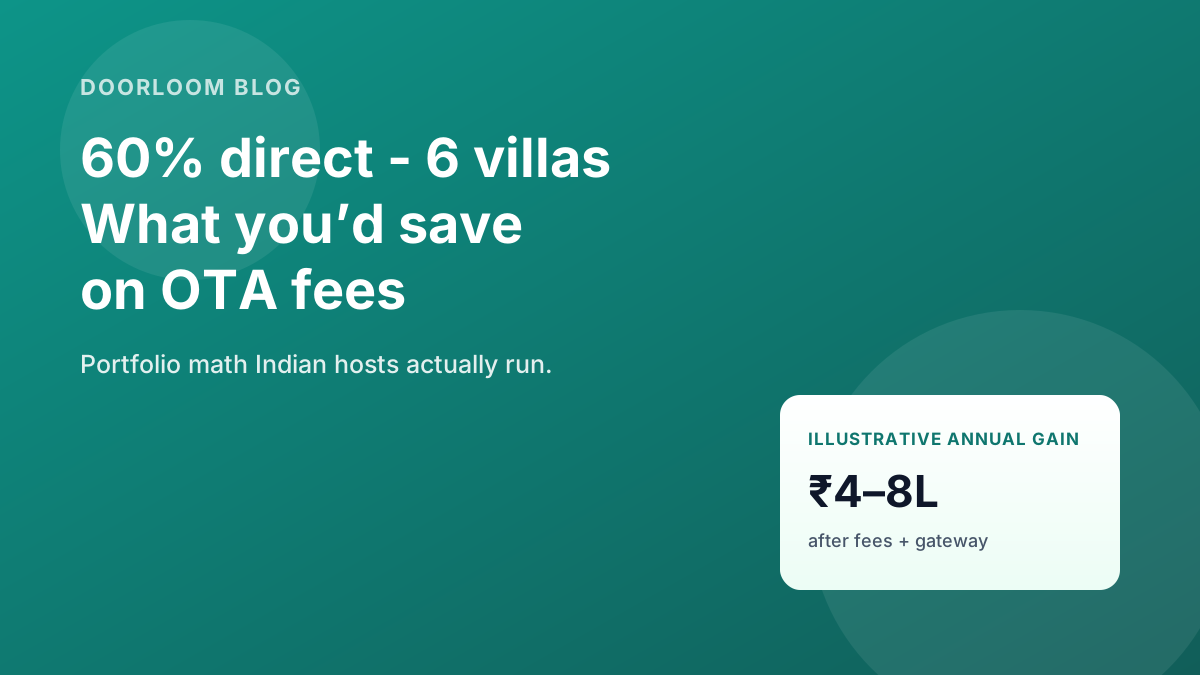
Calculate Your OTA Savings: What 60% Direct Would Look Like for a 6-Villa Portfolio
Six villas at 60% direct often save ₹4–8L yearly vs a heavy OTA mix. Run your real numbers through Doorloom's savings calculator before you change rates.
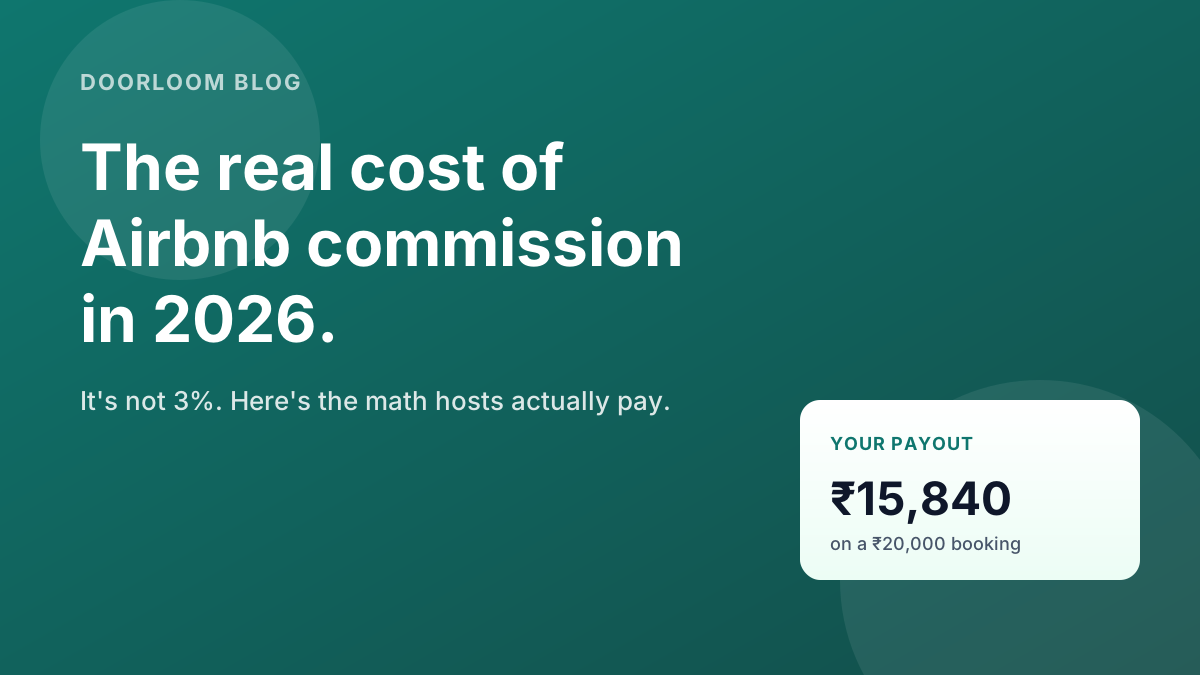
How Much You Actually Pay Airbnb in 2026 — The Real Commission Math
Airbnb's '3% host fee' isn't the whole story. Here's the real take on a ₹20,000 booking — service fees, GST, payment cuts — and what 60% direct would save you.
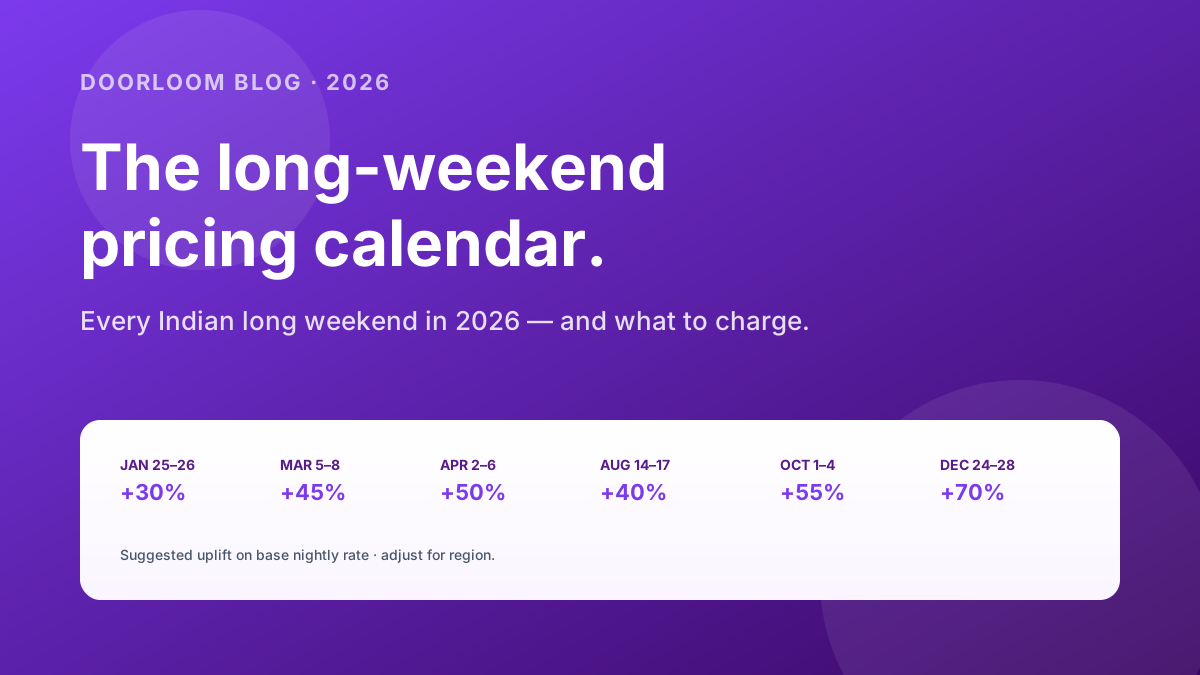
The 2026 Long-Weekend Pricing Calendar for Indian Villas
Every Indian long weekend in 2026, with the recommended nightly rate uplift, minimum-stay rule, and lead time to start charging it. Built for villa hosts.