The 2026 Long-Weekend Pricing Calendar for Indian Villas
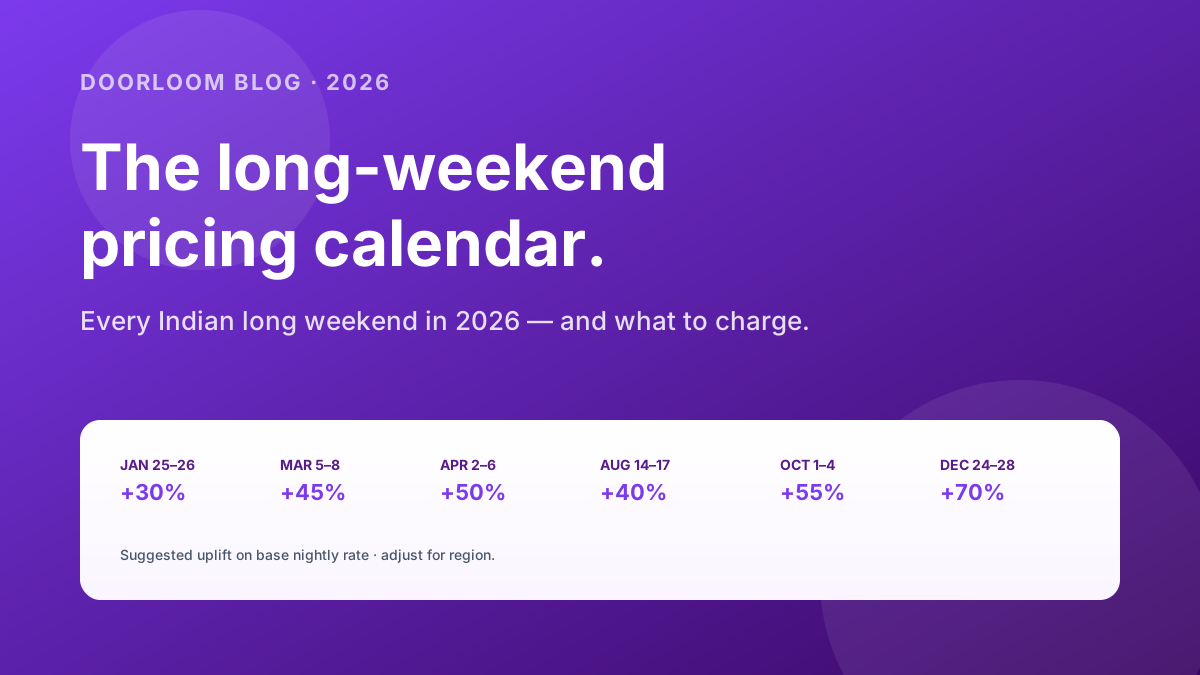
Every Indian long weekend in 2026, with the recommended nightly rate uplift, minimum-stay rule, and lead time to start charging it. Built for villa hosts.
The 2026 Long-Weekend Pricing Calendar for Indian Villas
TL;DR — There are 12 meaningful long weekends in India in 2026. Each one is worth a 30–70% nightly rate uplift, a 2- or 3-night minimum-stay rule, and a deliberate lead time. This post is the calendar — bookmark it, copy the dates into Doorloom, and stop under-pricing the highest-demand weekends of the year.
Why this matters
The single largest revenue mistake an Indian villa host makes in a year is pricing the long weekends like normal weekends. Twelve weekends do the work of sixty. If your nightly rate sits at base across all of them, you've left ₹2–4L on the table without realising.
This post is a working calendar. Every long weekend in 2026, the recommended uplift on your base nightly, the minimum-stay rule, and the lead time to start charging it. Twenty minutes of work in your calendar, locked-in margin for the year.
12meaningful long weekends in 2026 ₹2–4Ltypical revenue left on the table
20 minto load the year into DoorloomThe 2026 long-weekend calendar
Each row below: the weekend, the holiday driver, the recommended uplift on your base midweek rate, the minimum-stay, and when to start charging the elevated price. Numbers are midpoint guidance for a typical Indian villa market — sit higher on tighter-supply markets (Coorg, Munnar, Manali in winter) and lower for off-season beach markets.
| Weekend | Driver | Uplift | Min-stay | Start charging |
|---|---|---|---|---|
| Jan 25–26 | Republic Day (Mon) | +30% Fri/Sat, +50% Sun | 2 nights | 60 days out |
| Mar 5–8 | Holi long weekend | +45% all nights | 2 nights | 90 days out |
| Apr 2–6 | Good Friday + Eid weekend | +50% all nights | 3 nights | 90 days out |
| May 1–3 | Labour Day weekend | +25% Fri/Sat | 2 nights | 45 days out |
| Jun 26–28 | Eid-ul-Adha weekend | +30% Fri/Sat | 2 nights | 45 days out |
| Aug 14–17 | Independence Day weekend | +40% all nights | 3 nights | 60 days out |
| Sep 4–6 | Ganesh Chaturthi (regional) | +30% Fri/Sat | 2 nights | 45 days out |
| Oct 1–4 | Gandhi Jayanti + Dussehra | +55% all nights | 3 nights | 90 days out |
| Oct 19–21 | Diwali weekend | +60% all nights | 3 nights | 90 days out |
| Nov 13–15 | Children's Day weekend | +25% Fri/Sat | 2 nights | 30 days out |
| Dec 24–28 | Christmas long weekend | +70% all nights | 4 nights | 120 days out |
| Dec 30 – Jan 2 | Year-end / New Year | +90% all nights | 4 nights | 150 days out |
Three of these — Holi, Diwali, and Year-End — are the Big Three. Treat them as separate categories: longer minimum-stays, earlier price-up, no last-minute discounting.
State-specific weekends matter too
This calendar lists national drivers. Add 1–2 regional weekends that drive demand to your market — Onam in Kerala (late Aug / early Sep), Pongal in Tamil Nadu (mid-Jan), Durga Puja in West Bengal (early Oct). They behave like national long weekends locally.
The lead-time rule
The "start charging" column above isn't decorative. Long weekends have a sharp early-booking curve — couples lock in 60–120 days out because annual leave needs planning. Three patterns to follow:
- 1
90+ days out — set the elevated price
By 90 days out, your calendar should already show the long-weekend rate. Bookings landing this far out are price-insensitive — they want the date locked, full stop. - 2
30–60 days out — hold steady
The mid-window. Don't raise further unless you're fully sold out. Don't drop unless 60 days have passed and you're below 40% booked. Most hosts panic and over-discount in this window. - 3
0–14 days out — narrow choices
If still open at 7 days, drop 10–15%. At 2 days, drop another 10–15%. Better a discounted booking than an empty long-weekend night, where the opportunity cost is enormous.
The lead-time discipline matters more than the absolute uplift number. A villa priced at +50% from day 90 captures the early high- willingness-to-pay segment and the late price-sensitive segment by adjusting in the final two weeks. A villa flat-priced captures only the middle.
The minimum-stay rule
Long weekends bring out single-night bookers — the family in Bangalore who wants Saturday only, the couple who can only swing one night. Each of those bookings blocks a 3-night booking worth ~3× more.
Default rules to set in Doorloom for every marquee long weekend:
| Weekend tier | Minimum-stay |
|---|---|
| Republic Day, Labour Day, Children's Day, Eid weekends | 2 nights |
| Holi, Independence Day, Ganesh Chaturthi, Dussehra | 3 nights |
| Diwali, Christmas, Year-End | 4 nights |
The 4-night minimum on Christmas and Year-End is the single most important rule on this list. A 4-night booking at +70% uplift over Christmas is roughly 6.8× the revenue of a single weekday booking at base — and almost every host who tightens the rule fills those nights anyway. The demand is thicker than the base rate suggests.
Load the calendar into Doorloom in 20 minutes.
Set custom dates with rate overrides, minimum-stay rules, and channel-wide sync — once, for the entire year. Then forget it until December.
How to load this into your calendar
In Doorloom, the workflow takes about 20 minutes for a full year. The short version:
- 1
Open custom date pricing
For each property: Pricing → Custom dates → + Add range. The custom-rate override beats your base rate for those specific dates. - 2
Enter the long-weekend range
Use the dates in the table above. Set the nightly rate to base × (1 + uplift). For a ₹10,000 base on Diwali (+60%), that's ₹16,000. - 3
Set the minimum-stay
Same screen — set the minimum-stay rule for the range. Doorloom enforces it on enquiries from your direct site, the Airbnb listing, and any other channel that supports the rule. - 4
Repeat for all 12 weekends
It's repetitive but additive — once it's done you don't touch it for the year. Set a calendar reminder for the second Monday of January 2027 to do the same for next year.
When to break the rules
Three situations where the calendar above shouldn't be followed mechanically.
A practical example — one Goa villa, 2026
Quick walk-through of what the year looks like for an actual property, to make this concrete.
| Long weekend | Base rate | Uplift | Long-weekend rate | Nights × rate |
|---|---|---|---|---|
| Republic Day | ₹14,500 | +30% | ₹18,850 | 2 × ₹18,850 = ₹37,700 |
| Holi | ₹14,500 | +45% | ₹21,025 | 3 × ₹21,025 = ₹63,075 |
| Independence Day | ₹11,000 (monsoon base) | +15% (off-season) | ₹12,650 | 3 × ₹12,650 = ₹37,950 |
| Diwali | ₹14,500 | +60% | ₹23,200 | 3 × ₹23,200 = ₹69,600 |
| Christmas | ₹14,500 | +70% | ₹24,650 | 4 × ₹24,650 = ₹98,600 |
| Year-End | ₹14,500 | +90% | ₹27,550 | 4 × ₹27,550 = ₹1,10,200 |
Just those six weekends produce ₹4.17L of gross at uplifted rates, versus ₹2.46L at flat base — a delta of ₹1.7L on six weekends alone. The other six long weekends in the year add roughly another ₹80K of delta. ₹2.5L of recovered revenue per villa per year, from a 20-minute calendar setup.
Manage the long-weekend calendar from your phone.
The Doorloom mobile app shows occupancy and rate per long weekend in one screen — so you can spot any that's still under-priced 60 days out.


What hosts get wrong about long-weekend pricing
Three patterns to avoid:
- The "hold the line" mistake. Treating long weekends like a solidarity exercise — "I won't gouge guests" — when the guests are actively willing to pay. Your refusal to charge market rate doesn't help the guest; it just gets the booking taken by the villa next door who priced honestly.
- The "wait and see" mistake. Holding base rate until 30 days out, hoping demand reveals itself. By then the high-willingness-to- pay early-bookers are gone.
- The "uniform uplift" mistake. Charging +50% across every long weekend. Diwali and Year-End genuinely deserve +60% to +90%; Children's Day deserves +25%. Match the uplift to the weekend's actual demand profile.
How this fits with the rest of your pricing
Long-weekend pricing is one layer of a four-layer system —
- The base rate framework sets your midweek midpoint.
- The Monday 10-minute ritual lets you adjust as bookings come in.
- This post handles the annual seasonality calendar.
- The WhatsApp enquiry templates let you actually convert the demand the elevated rates attract.
Get all four right and you've built the full pricing engine.
Frequently asked questions
The takeaway
Twelve weekends a year deliver a disproportionate share of your annual revenue. Twenty minutes of calendar work — done once, in March, for the entire year — captures most of the upside. The hosts who do this have a quietly more profitable business than the hosts who don't, with no extra effort, no new properties, and no marketing spend. Just better pricing on the days that matter.
Build your 2026 long-weekend calendar in Doorloom.
Set the dates, the uplifts, and the minimum-stay rules in one screen — then push them across every channel automatically.
Download the Doorloom app
Run your rentals from your pocket.
Approve bookings, reply to enquiries on WhatsApp, and check today's check-ins — all from the Doorloom mobile app.
Keep reading
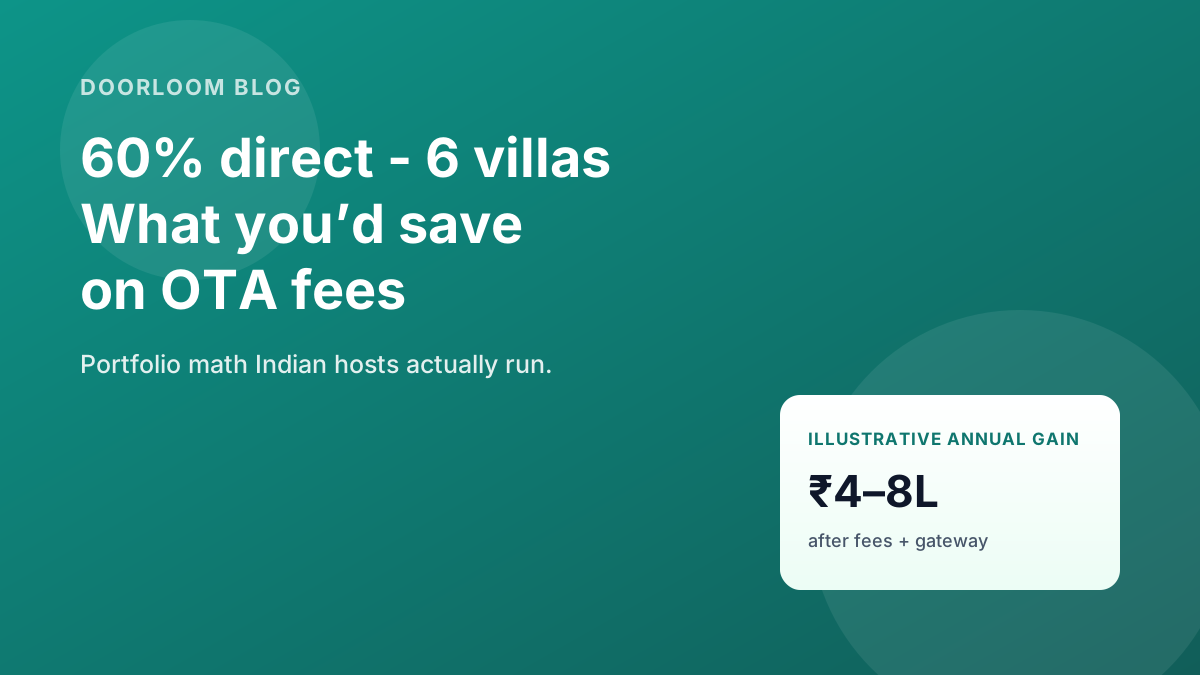
Calculate Your OTA Savings: What 60% Direct Would Look Like for a 6-Villa Portfolio
Six villas at 60% direct often save ₹4–8L yearly vs a heavy OTA mix. Run your real numbers through Doorloom's savings calculator before you change rates.
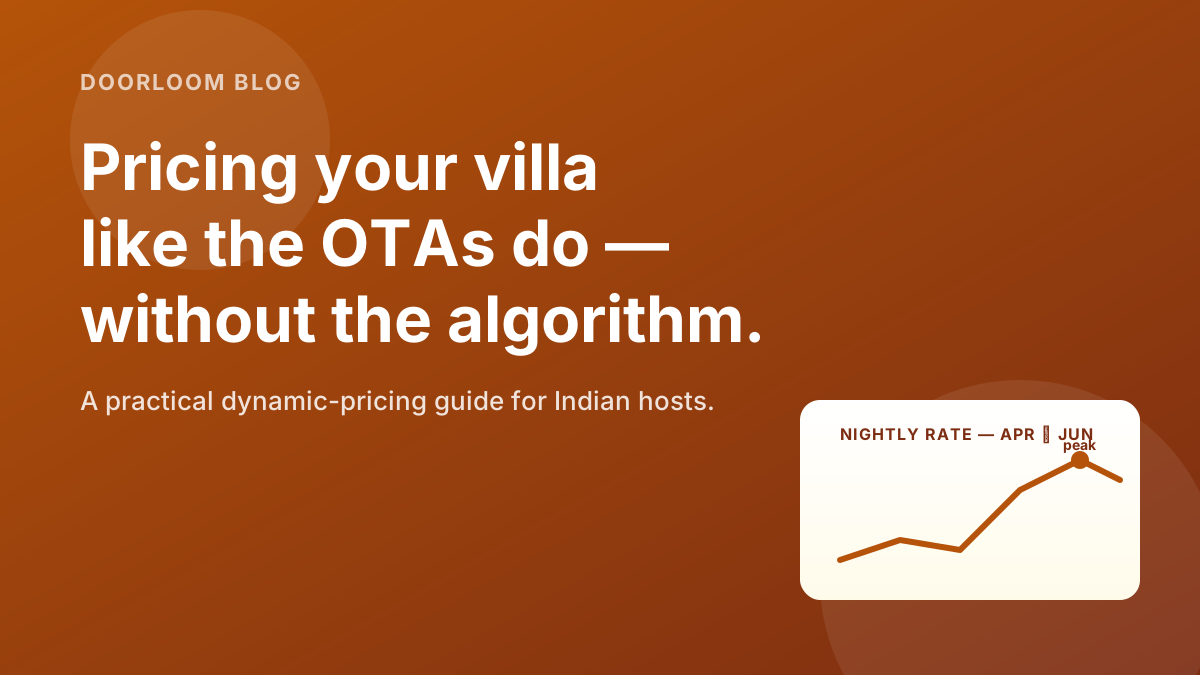
Dynamic Pricing for Vacation Rentals: A Practical Guide for Indian Hosts
How to set, raise, and discount your villa's nightly rate without an algorithm — based on demand, season, lead time, and length of stay. Built for Indian hosts.
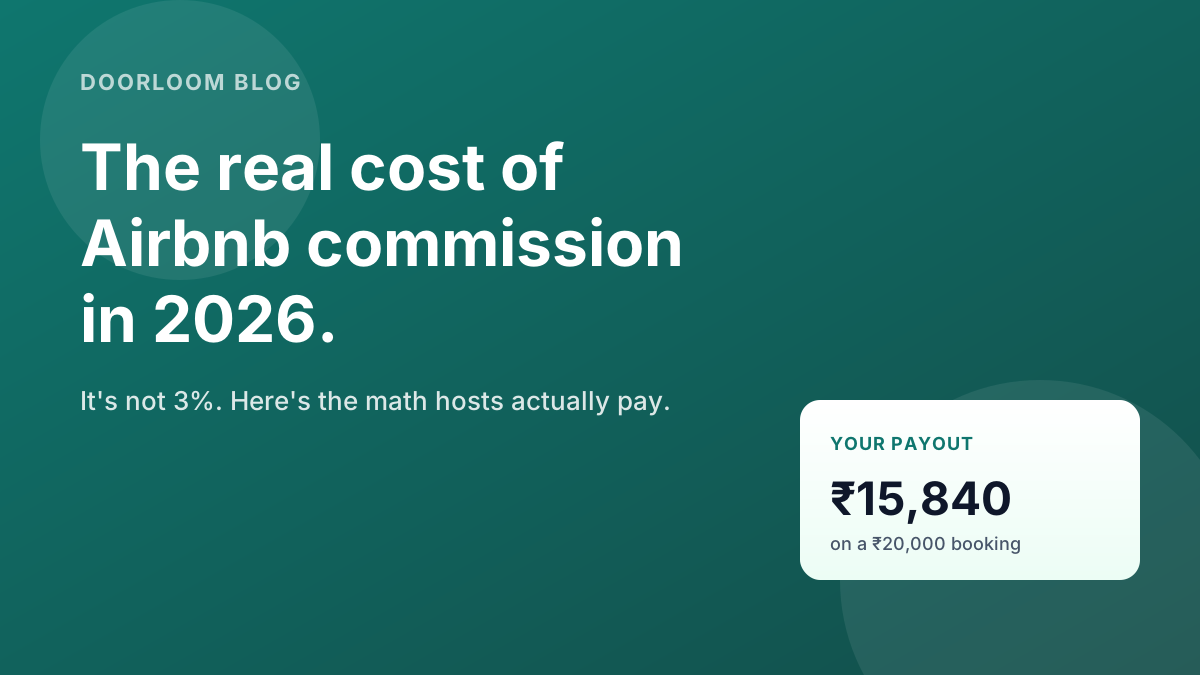
How Much You Actually Pay Airbnb in 2026 — The Real Commission Math
Airbnb's '3% host fee' isn't the whole story. Here's the real take on a ₹20,000 booking — service fees, GST, payment cuts — and what 60% direct would save you.